
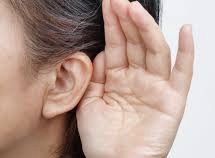
Hearing loss can vary in severity, from slight difficulty hearing soft sounds to significant challenges understanding everyday speech. The degree of hearing loss describes how much your hearing has changed and how it may affect communication in daily life.
Hearing ability is typically measured in decibels (dB). A hearing threshold between 0 and 20 dB is generally considered within the normal range. When hearing thresholds exceed this level, professionals classify the hearing loss as mild, moderate, severe, or profound.
Below is a brief overview of each category.
Mild Hearing Loss (26–40 dB)
Mild hearing loss means that the faintest sounds you can detect fall between 26 and 40 dB. People with mild hearing loss often hear louder vowel sounds clearly, as these occupy the lower-frequency and higher-intensity area of the so-called “speech banana” on an audiogram. However, they may struggle to hear softer consonants such as s, f, t, and k, which are essential for speech clarity.
Individuals with mild hearing loss may also find it difficult to hear soft-spoken voices, children’s voices, or high-pitched environmental sounds like birdsong or crickets. Hearing usually works well in quiet settings, but understanding speech becomes more challenging in background noise.
Moderate Hearing Loss (41–70 dB)
Moderate hearing loss is typically defined as thresholds between 41 and 70 dB, although some classifications describe it as 40–60 dB. At this level, conversational speech may be difficult to understand unless the speaker raises their voice. Visual cues, such as seeing the speaker’s face, become more important for comprehension.
Both vowels and consonants may be affected, leading to reduced speech clarity. Some individuals with moderate hearing loss can manage without hearing aids in very quiet environments. However, the presence of background noise often makes communication significantly more difficult.
Severe and Profound Hearing Loss (Above 70 dB)
Severe hearing loss generally refers to thresholds above 70 dB. At this stage, following group conversations becomes very challenging, and communication without hearing aids is typically difficult. Everyday conversations and phone calls may be hard to understand.
Profound hearing loss is sometimes defined as thresholds of 90 dB or higher. In these cases, understanding speech without amplification is extremely limited, and comprehensive auditory rehabilitation is often necessary. Although some very loud sounds may still be audible, access to spoken language usually requires hearing technology and structured support.
No matter the type or degree of hearing loss, the most noticeable change is often that sounds become softer, less clear, or distorted. Certain sounds may seem to disappear altogether, and understanding speech—especially in conversations—can become increasingly difficult. Because communication is such an important part of daily life, seeking help early can make a significant difference. If you notice changes in your hearing, a simple hearing test is an important first step.

Some people say, “It’s too late for me,” or “I should have done something years ago.” The truth is, it is never too late. As the old proverb says, “The best time to plant a tree was 20 years ago. The second best time is now.” The same applies to your hearing. Taking the first step today can open the door to clearer conversations and a better quality of life.
Questions about hearing loss?
For personal advice or help booking an appointment, you can call us at +46 8 720 39 00 or leave a message on the right.
