
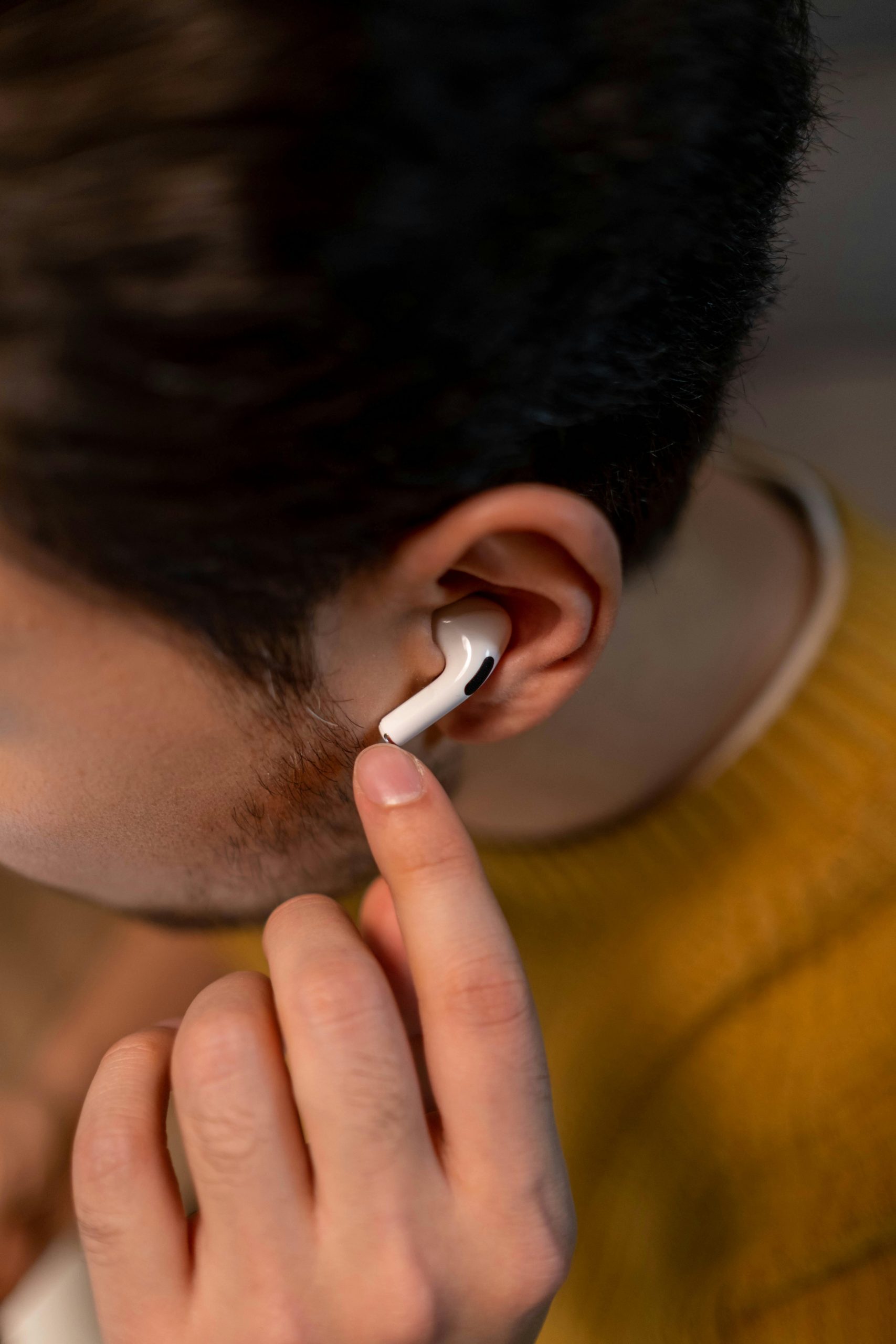
Hearing tests with AirPods are becoming an easy way to get a quick overview of your hearing at home. You simply wear the earbuds in a quiet environment and follow instructions in an app that plays tones or speech at different levels. You respond whenever you hear a sound, and the app gives an estimate of your hearing based on your answers.
Some versions also include speech-in-noise tests, where you listen to words with background sound to see how well you can understand speech in more realistic situations.
We have tried the AirPods hearing test ourselves, and the experience was surprisingly similar to a traditional hearing test. The setup and type of listening tasks felt very familiar, even though it was done through a mobile app instead of clinical equipment.
That said, these types of tests are mainly meant as a screening tool. They can give a helpful indication of your hearing, but they don’t replace a full hearing test with an audiologist. If something seems off, it’s always a good idea to follow up with a professional assessment.
AirPods as hearing support – do they work?
AirPods can also be used in some situations as a form of basic hearing support, but they are not a replacement for proper hearing aids. While they can amplify sound and improve clarity in certain environments, they are not designed for long-term or clinical use.
One thing we noticed is that they can feel quite occluding in the ear, which can make your own voice sound blocked or “boomy”, especially compared to traditional hearing aids that are custom-fitted. Another limitation is battery life. Even with a full charge, they typically do not last a full day of continuous use, unlike hearing aids that are designed for all-day wear.
So while AirPods can be helpful as a supplement or for testing and occasional use, they do not replace properly fitted hearing aids prescribed by an audiologist.
Watch our video where we talk about it in more detail — click here to watch the clip (in Swedish).
Louise Fogelqvist, Certified Audiologist