
Publicerad den Lämna en kommentar

How does a hearing test with AirPods work? We tried it ourselves

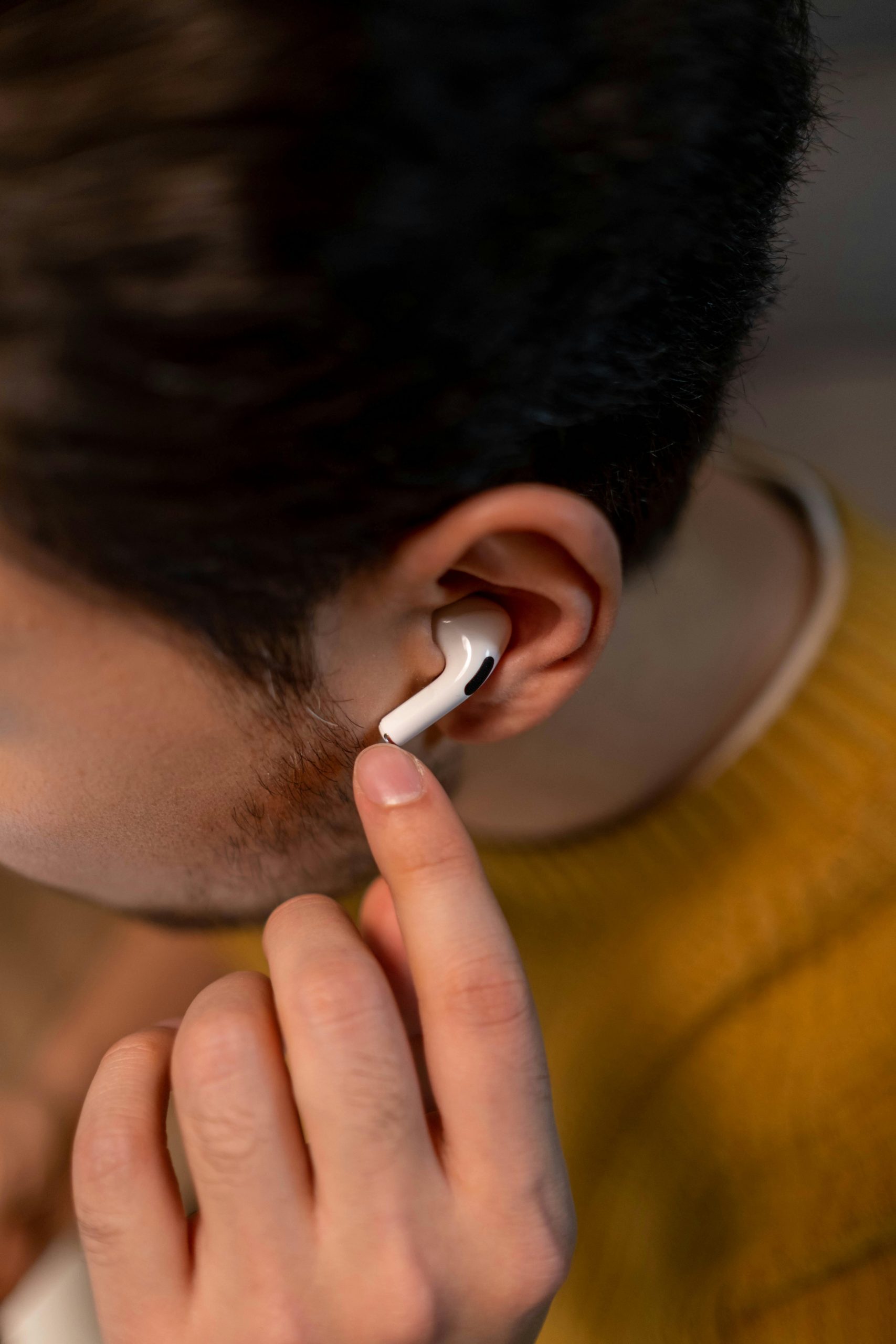
Hearing tests with AirPods are becoming an easy way to get a quick overview of your hearing at home. You simply wear the earbuds in a quiet environment and follow instructions in an app that plays tones or speech at different levels. You respond whenever you hear a sound, and the app gives an estimate of your hearing based on your answers.

Some versions also include speech-in-noise tests, where you listen to words with background sound to see how well you can understand speech in more realistic situations.

We have tried the AirPods hearing test ourselves, and the experience was surprisingly similar to a traditional hearing test. The setup and type of listening tasks felt very familiar, even though it was done through a mobile app instead of clinical equipment.

That said, these types of tests are mainly meant as a screening tool. They can give a helpful indication of your hearing, but they don’t replace a full hearing test with an audiologist. If something seems off, it’s always a good idea to follow up with a professional assessment.

AirPods as hearing support – do they work?

AirPods can also be used in some situations as a form of basic hearing support, but they are not a replacement for proper hearing aids. While they can amplify sound and improve clarity in certain environments, they are not designed for long-term or clinical use.

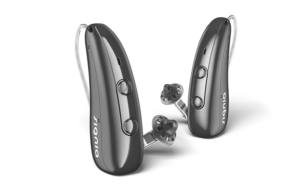
One thing we noticed is that they can feel quite occluding in the ear, which can make your own voice sound blocked or “boomy”, especially compared to traditional hearing aids that are custom-fitted. Another limitation is battery life. Even with a full charge, they typically do not last a full day of continuous use, unlike hearing aids that are designed for all-day wear.

So while AirPods can be helpful as a supplement or for testing and occasional use, they do not replace properly fitted hearing aids prescribed by an audiologist.

Watch our video where we talk about it in more detail — click here to watch the clip (in Swedish).

Louise Fogelqvist, Certified Audiologist

Publicerad den Lämna en kommentar

Rechargeable hearing aids – how long do they last?

buy-infinio-phonak

We often get questions about rechargeable hearing aids with Bluetooth—and it’s easy to see why! The main thing people want to know is: how long does the battery actually last? And the answer is… it depends. (Yep, the classic answer nobody loves—but it’s true.)

There are several factors that affect battery life. First, the model of hearing aid you have. Then there’s the type of phone you use, your level of hearing loss, and not least the environment you’re in. Do you have more significant hearing loss? Then the devices will use more power. Are you often in noisy environments? That’s more power again. These little devices have to work harder in those situations.

Let’s say you spend a lot of time in the car. If your hearing aids have the right technology, they’ll constantly communicate with each other to give you the best possible speech clarity. It’s like having two tiny assistants in your ears, continuously adjusting the sound for you.

Let’s take an example: hearing aids from Phonak, which are “Made for All.” They work with most Bluetooth-enabled devices—Android phones, iPhones, older mobile phones, computers, certain TVs… pretty much anything you can connect to. Most manufacturers (including Phonak) state that it takes about three hours to charge them from zero to full. That said, we recommend charging them overnight—so you know they’re ready to go in the morning, fully powered.

If you have moderate hearing loss and spend your day in a typical office environment, the battery can last up to 24 hours—even with about 80 minutes of streaming. If you stream for five hours instead (maybe a podcast marathon or binge-watching your favorite show), you can expect around 20 hours of battery life. A more “average” day—say four hours of phone calls and four hours of TV—lands at roughly 16 hours.

Hearing aids from ReSound, on the other hand, are “Made for iPhone.” They use a slightly different Bluetooth technology that actually consumes less power. Here too, it takes about three hours to fully charge from empty. Without any streaming, you can get up to 30 hours of battery life. And if you stream about half the time—music, videos, or calls—you can still get around 24 hours. Pretty impressive, actually.

But how long do the batteries themselves last?

Most manufacturers say you can expect a lifespan of around 5–6 years. After about four years, you may start to notice that the battery life becomes a bit shorter. Nothing dramatic—but it’s good to be aware of.

Depending on the model, the battery may be replaceable directly at your hearing clinic, or the device may need to be sent in for service. This varies between manufacturers.

One last important tip

Don’t leave your hearing aids completely discharged for long periods. This applies to most rechargeable devices. It’s best to use them regularly. And if you know you won’t be using them for a while: charge them fully, turn them off, and then store them.

Publicerad den Lämna en kommentar

How Auracast Improves Hearing Accessibility for People with Hearing Loss

buy-auracast-hearing-aid

How Auracast Can Improve Hearing for People with Hearing Loss

Hearing loss affects millions of people worldwide, often making it difficult to follow conversations or understand speech in noisy environments. While traditional hearing aids have significantly improved over the years, challenges remain—especially in public settings like airports, theaters, or lecture halls. A new wireless audio technology, Auracast, offers a promising step forward in accessibility and everyday usability.

What Is Auracast?

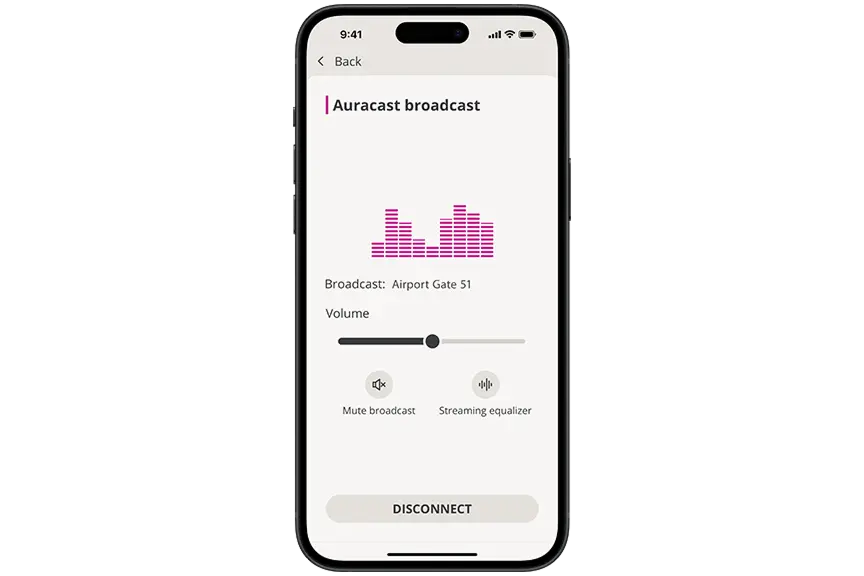
Auracast is a broadcast audio feature built on Bluetooth Low Energy (LE Audio). Unlike conventional Bluetooth connections, which typically pair one device to another, Auracast allows a single audio source to broadcast sound to an unlimited number of nearby receivers. This means that compatible hearing aids, earbuds, or headphones can “tune in” to a shared audio stream—similar to selecting a Wi-Fi network.

oticon-auracast

Practical Benefits in Real-Life Situations

For people with hearing loss, Auracast can make a tangible difference in environments where background noise and distance are major barriers. For example, in a busy train station, an Auracast-enabled announcement system can transmit clear audio directly to a user’s hearing aids, bypassing ambient noise. In theaters or conference venues, users can receive high-quality sound streamed straight from the microphone or sound system.

This direct transmission reduces reliance on lip-reading or guesswork and can significantly lower listening fatigue. Importantly, users remain in control—they can choose which broadcast to connect to and adjust volume according to their personal preferences.

Integration with Modern Hearing Aids

Several leading hearing aid manufacturers, including GN Hearing, Starkey, and Oticon, have begun integrating Auracast compatibility into their latest devices. This integration means users do not need additional accessories or intermediary devices to benefit from the technology. As more public spaces adopt Auracast broadcasting, the value of having compatible hearing aids will continue to grow.

auracast-hearing-aid

A Step Toward Inclusive Audio Environments

Auracast represents more than just a technical upgrade; it is part of a broader shift toward inclusive design. By enabling shared audio experiences that are accessible to everyone, it helps bridge the gap between people with normal hearing and those with hearing impairments.

While widespread adoption will take time, the direction is clear. As infrastructure and device compatibility expand, Auracast has the potential to become a standard feature in public audio systems—making everyday listening more accessible, reliable, and user-friendly.

In that sense, Auracast is not just an innovation; it is a practical tool that can meaningfully improve quality of life.

Publicerad den Lämna en kommentar

Hearing clinic in Stockholm for english speakers

about-us-audiologiska

If you are an English speaker living in or visiting Sweden and need hearing care, Audiologiska makes it easy to get professional support. First of all, we have several locations across the Stockholm area, which means you can choose the one that is most convenient for you.

Our Locations

  • Lidingö – 5A, Herserudsvägen, 181 50, Lidingö

  • Danderyd – Svärdsvägen 21 182 33 Danderyd

  • Dalens Sjukhus – Åstorpsringen 6, 121 31, Enskededalen

What to expect

When you visit Audiologiska, you will receive professional, personalized hearing care in English. For example, our team can help you with hearing assessments, hearing aid fitting, and advice on the right hearing solution. Additionally, we make sure your visit is comfortable, so you can ask questions freely and get the support you need.

Booking your visit

You can easily book an appointment online through our website. If you already have hearing test results, please bring them or send them to us before your appointment. Otherwise, you can take an online hearing test using this link to prepare for your visit.

Also, you can call us at +46 8 720 39 00 or email info@audiologiska.se for any questions or to schedule an appointment. This way, we can make sure your visit goes smoothly.

Why choose audiologiska

We have English-speaking staff to ensure clear communication. In addition, our multiple locations across Stockholm make it easy to find a convenient clinic. Finally, we provide personalized hearing care that is tailored to your needs.

Overall, whether you are new to Sweden or just need a hearing check-up, visiting Audiologiska is simple, efficient, and stress-free. Therefore, book your appointment today and take the first step towards better hearing.

Publicerad den Lämna en kommentar

Starkey Adds Auracast Assistant, Google Fast Pair to Omega AI Platform

auracast-starkey

Starkey has announced exciting new enhancements to its Omega AI platform, expanding connectivity and usability with the addition of Auracast Assistant and Google Fast Pair support. These updates aim to make the hearing experience smoother, more intuitive, and better integrated with users’ everyday technology.

Auracast Assistant brings support for Auracast™ broadcast audio — a next‑generation Bluetooth™ feature designed to stream audio directly to hearing aids and earbuds in public spaces such as airports, theaters, or classrooms. With Starkey’s implementation, Omega AI users will receive real‑time assistance and prompts to connect to available Auracast broadcast streams, making shared audio experiences more accessible than ever.

In addition, Google Fast Pair integration simplifies the Bluetooth pairing process for Android users. With Fast Pair, compatible devices automatically appear on a nearby Android phone or tablet when in range, allowing users to connect with one tap. This eliminates the need for manual Bluetooth menus and saves time — especially beneficial for people who may already struggle with traditional device pairing.

Together, these features strengthen Starkey’s commitment to seamless connectivity and enhanced user experience. By combining cloud‑enabled intelligence with cutting‑edge audio standards, the Omega AI platform continues to push hearing technology forward — helping wearers stay better connected to the sounds that matter most.